Jamaica is a nation of extraordinary beauty, vibrant culture, and resilient people. Yet for decades, the island has grappled with one of the highest murder rates in the world, persistent gang violence, and evolving criminal enterprises that range from lottery scamming to sophisticated cyber crime. These challenges have strained the resources of the Jamaica Constabulary Force (JCF) and the Jamaica Defence Force (JDF), impacted tourism revenues, deterred foreign investment, and caused immeasurable suffering in communities across the island.
The Jamaican government has deployed significant measures to combat crime, including Zones of Special Operations (ZOSO), States of Emergency (SOEs), and increased security force presence in hotspot areas. While these interventions have shown results in specific communities, the broader challenge of reducing crime across the island demands new approaches. Artificial intelligence represents one of the most promising frontiers in the fight against crime, offering tools that can amplify the effectiveness of Jamaica's security forces, protect communities, and create safer cities.
This article explores how AI technologies can be applied to Jamaica's unique security challenges, from predictive policing in Kingston to smart border security at the island's international airports. We examine both the tremendous potential and the critical ethical considerations that must guide the responsible deployment of these powerful tools.
Understanding Jamaica's Crime Landscape
To appreciate how AI can help, it is essential to understand the nature and scale of crime in Jamaica. The island consistently records murder rates that place it among the highest in the world. In recent years, annual homicide figures have exceeded 1,400, with the majority of murders concentrated in specific urban areas of Kingston, St. Andrew, St. James, and Clarendon. Gang-related violence accounts for a significant proportion of these killings, driven by turf wars, extortion, and the drug trade.
Beyond murder, Jamaica faces a complex web of criminal activity. Lottery scamming, which emerged in the early 2000s, has grown into a multi-million dollar criminal enterprise that defrauds victims, primarily elderly Americans, out of their life savings. The proceeds fuel further violence as scammers invest in weapons and gang protection. Cyber crime is an emerging threat, with Jamaican businesses and individuals increasingly targeted by online fraud, identity theft, and ransomware attacks.
The security forces operate under significant resource constraints. The JCF, Jamaica's primary law enforcement body, faces challenges with staffing, equipment, and training. The JDF provides support during emergencies and special operations but was not designed to serve as a permanent policing force. Community trust in the security forces, while improving, has historically been affected by incidents of excessive force and corruption within the ranks.
It is against this backdrop that AI offers not a silver bullet, but a powerful set of tools that can help Jamaica's security apparatus work smarter, respond faster, and prevent crimes before they occur.
Predictive Policing: Anticipating Crime Before It Happens
Predictive policing is one of the most established applications of AI in law enforcement worldwide. It uses machine learning algorithms to analyse historical crime data, geographic information, weather patterns, social media activity, and other variables to generate predictions about where and when crimes are most likely to occur. These predictions allow police to deploy resources proactively rather than reactively.
For Jamaica, predictive policing could transform how the JCF allocates its limited resources. Instead of relying solely on past experience and intuition to determine patrol routes, commanders could use AI-generated heat maps that update in real time, showing the areas at highest risk during specific times of day. This is particularly valuable in parishes like St. James, where violent crime often surges in particular communities and during particular periods.
The technology works by identifying patterns that human analysts might miss. For example, AI might detect that violent incidents in a particular Kingston community tend to spike three days after a major dance event, or that certain weather conditions correlate with increased criminal activity in Montego Bay. By surfacing these hidden patterns, predictive policing enables a more targeted and efficient response.
Implementing Predictive Policing in Jamaica
Successful implementation would require several key steps. First, the JCF would need to digitise and centralise its crime data, ensuring that reports from every police division are captured in a format that AI systems can analyse. Second, the algorithms would need to be trained on Jamaican data specifically, as crime patterns in Kingston are fundamentally different from those in Chicago or London. Third, officers would need training to interpret and act on AI-generated predictions effectively.
The JCF's existing Crime Stop programme and community liaison officers could provide valuable ground-truth data to refine AI predictions over time. By combining technological analysis with the knowledge that officers and community members already possess, Jamaica can build a predictive policing system that is both data-driven and community-informed.
Smart CCTV and Video Analytics
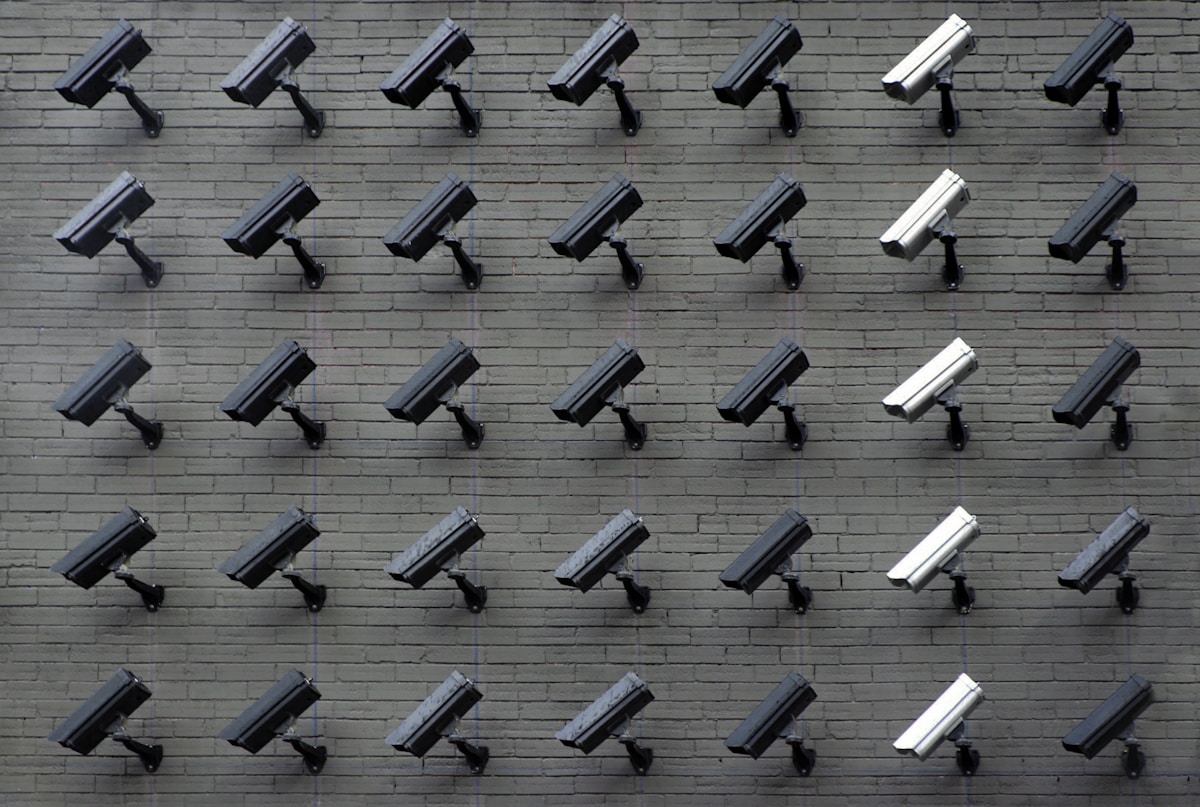
Jamaica has invested in CCTV infrastructure in urban areas, particularly in Kingston and Montego Bay. However, the challenge with traditional CCTV is that it requires human operators to monitor feeds continuously, which is expensive, prone to human error, and limited by the number of screens any individual can watch effectively. AI-powered video analytics fundamentally changes this equation.
Modern AI systems can analyse hundreds of camera feeds simultaneously, detecting specific events and behaviours that would be impossible for human operators to catch consistently. These systems can identify unattended packages or suspicious objects in crowded areas, detect aggressive behaviour or physical altercations in real time, recognise vehicles of interest including stolen cars and vehicles associated with wanted individuals, track the movement of individuals across multiple camera feeds, and detect crowd formations that may indicate the beginning of a violent incident.
For Kingston, where the city centre and key commercial areas already have camera coverage, AI analytics could transform existing infrastructure into a proactive security tool. Rather than reviewing footage after a crime has occurred, security forces could receive real-time alerts when the AI detects activity that matches threat patterns. Response times to incidents could be reduced from minutes to seconds.
Smart City Surveillance for Kingston, Montego Bay, and Spanish Town
The smart city concept extends beyond simple camera monitoring. An integrated AI surveillance system for Jamaica's major urban centres would connect CCTV feeds, traffic cameras, license plate readers, emergency call data, and sensor networks into a unified command centre. This would enable authorities to coordinate responses across multiple agencies, track suspects as they move through the city, manage traffic flows during emergencies to speed up response times, and provide real-time situational awareness during major events and public gatherings.
Spanish Town, as one of the most violence-affected communities in Jamaica, could benefit enormously from smart surveillance. The narrow streets and dense housing of areas like Central Village and De La Vega City present unique challenges for traditional policing. AI-powered cameras with edge computing capabilities could provide the JCF with eyes in areas where maintaining a permanent physical presence is difficult, while analytics could help identify the movement patterns of known gang members and anticipate potential confrontations.
Montego Bay, as Jamaica's second city and a critical tourism hub, presents a different use case. Smart surveillance in the Hip Strip area, the cruise ship terminal, and surrounding communities could help maintain the safety environment that is essential for the tourism industry while also protecting the residents of vulnerable inner-city communities. The dual benefit of supporting both public safety and economic development makes this a particularly compelling investment.
Gunshot Detection Systems
Gunshot detection technology represents one of the most immediately impactful AI applications for Jamaica. These systems use networks of acoustic sensors deployed across urban areas to detect, classify, and locate gunfire in real time. When shots are fired, the AI system analyses the sound waves to distinguish gunshots from other loud noises such as fireworks, vehicle backfires, or construction activity. It then triangulates the location of the gunfire with precision, often within a few metres, and immediately alerts police dispatch with the exact coordinates.
The impact on response times is dramatic. In many Jamaican communities, gunshots may go unreported for hours, if they are reported at all. Residents in garrison communities often fear retaliation from gangs if they are seen calling the police. Gunshot detection systems remove this barrier entirely, as the technology detects the event automatically without requiring any citizen to make a report. Police can be dispatched within seconds of shots being fired, increasing the chances of apprehending shooters, providing timely medical assistance to victims, and deterring further violence.
Cities in the United States, including New York, Chicago, and San Francisco, have deployed gunshot detection systems such as ShotSpotter with measurable results. For Jamaica, where the concentration of gun violence in specific communities is a defining feature of the crime landscape, this technology could be transformative. Deploying sensor networks in the most violence-affected areas of Kingston, Spanish Town, and Montego Bay would give the JCF a powerful new capability in the fight against gun crime.
Gang Network Analysis and Criminal Intelligence
Jamaica's gang landscape is complex, with dozens of active gangs controlling territory across the island. Understanding the relationships between gang members, identifying leadership structures, mapping alliances and rivalries, and tracking the flow of weapons and money through criminal networks are all essential to disrupting gang activity. AI-powered network analysis tools can accelerate and deepen this work significantly.
Social network analysis algorithms can process data from multiple sources, including arrest records, phone records, social media activity, financial transactions, and intelligence reports, to build comprehensive maps of criminal networks. These tools can identify the most influential individuals within a network, even if those individuals have never been arrested or are not on the police's radar. They can also predict when gang conflicts are likely to escalate into violence, based on patterns of social media activity, recent arrests, or shifts in territorial control.
For the JCF's organised crime units, AI-powered intelligence tools could provide a level of analytical capability that currently requires teams of analysts working for months. An AI system could process in hours what would take human analysts weeks, surfacing connections and patterns that might otherwise go undetected. This is particularly valuable in investigating complex criminal enterprises like lottery scamming operations, where the links between callers, organisers, money couriers, and international accomplices span multiple countries and communication channels.
Combating Lottery Scamming with AI
Lottery scamming has been a persistent problem for Jamaica, causing billions of dollars in losses to victims abroad while fuelling violence and corruption at home. AI can attack this problem from multiple angles. Telecommunications analysis using AI can identify the calling patterns associated with scamming operations, flagging numbers that make high volumes of international calls to specific area codes associated with elderly populations. Natural language processing can analyse recorded calls to identify scam scripts and tactics, helping law enforcement stay ahead of evolving scam methods.
Financial intelligence powered by AI can track the flow of scam proceeds through the banking system, identifying the accounts, wire transfers, and money service businesses used to launder stolen funds. By working with international partners and using AI to connect data across borders, Jamaican law enforcement can build stronger cases against scamming networks and their financial infrastructure.
AI for Border Security
Jamaica's two international airports, Norman Manley International Airport in Kingston and Sangster International Airport in Montego Bay, serve as the island's primary gateways. They are also potential entry and exit points for contraband, wanted individuals, and human trafficking. AI can significantly enhance border security operations at both airports without creating the kind of intrusive, slow experience that frustrates legitimate travellers.
AI-powered passenger screening systems can analyse travel patterns, booking data, and other risk indicators to flag travellers who warrant additional scrutiny. These systems operate in the background, allowing the vast majority of passengers to pass through quickly while directing security resources toward genuine risks. Advanced document verification using AI can detect forged or altered travel documents with greater accuracy than manual inspection. Facial recognition technology can match arriving passengers against watchlists of wanted individuals, missing persons, and persons of interest.
For cargo and maritime security, AI can analyse shipping manifests, container data, and trade patterns to identify shipments that may contain contraband. Jamaica's seaports handle significant volumes of cargo, and manual inspection of every container is physically impossible. AI-powered risk assessment allows customs officers to focus their inspections on the shipments most likely to contain illegal goods, improving detection rates while maintaining the flow of legitimate trade.
Drone Surveillance and Coastal Monitoring
Jamaica's extensive coastline presents a significant challenge for border security. Drug traffickers and human smugglers frequently use small boats to move contraband and people along the coast and to offshore drop points. AI-powered drone surveillance can patrol coastal areas far more efficiently than traditional maritime patrols. Drones equipped with AI vision systems can detect small vessels, identify unusual activity on remote beaches, and alert the JDF Coast Guard in real time.
By combining drone surveillance with satellite imagery analysis and AI-powered maritime tracking systems, Jamaica can build a comprehensive coastal monitoring capability that operates around the clock, covering vast stretches of coastline that would be impossible to patrol physically.
Community Policing Enhanced by AI
Technology works best when it enhances rather than replaces human relationships. Community policing, which emphasises building trust and cooperation between police and the communities they serve, is widely recognised as one of the most effective approaches to reducing crime. AI can enhance community policing in several important ways.
Citizen reporting apps powered by AI can provide residents with a safe, anonymous way to share information about criminal activity in their communities. Natural language processing can categorise and prioritise incoming reports, ensuring that urgent tips reach the right officers quickly. AI can also analyse patterns in citizen reports to identify emerging crime trends before they show up in official statistics.
Sentiment analysis of social media can help police commanders understand community attitudes toward policing in different areas, identifying communities where trust is strong and communities where additional engagement is needed. This information can guide the deployment of community liaison officers and the design of outreach programmes. By understanding how communities perceive the police, the JCF can tailor its approach to build the trust that is essential for effective crime prevention.
AI can also assist with resource allocation for community programmes. By analysing data on poverty, unemployment, school dropout rates, and other social indicators alongside crime data, AI systems can help the government and NGOs target intervention programmes at the communities and individuals most at risk of becoming involved in crime. Prevention is always more effective and less costly than enforcement, and AI can make prevention efforts significantly more targeted and effective.
AI-Enhanced Forensics and Investigation
Crime scene investigation and forensic analysis are critical to solving crimes and securing convictions. AI is advancing forensic capabilities in several areas that are directly relevant to Jamaica. Digital forensics, including the analysis of phones, computers, and social media accounts seized during investigations, can be accelerated dramatically by AI tools that can process and categorise vast amounts of digital evidence. Ballistics analysis using AI can match bullets and shell casings to specific weapons more quickly and accurately. DNA analysis can be enhanced by AI algorithms that can work with degraded or mixed samples that would challenge traditional analysis methods.
For Jamaica, where the clearance rate for murders has historically been low, AI-enhanced forensics could make a significant difference. Faster, more accurate forensic analysis means stronger cases, more convictions, and a greater deterrent effect. When criminals know that the probability of being caught and convicted is high, the calculus of committing crimes changes fundamentally.
Ethical Considerations and Privacy Concerns
The deployment of AI for crime prevention raises significant ethical questions that Jamaica must address head-on. These are not secondary considerations; they are fundamental to the legitimacy and effectiveness of any AI security programme.
Privacy is the most immediate concern. Mass surveillance, facial recognition, and the collection of vast amounts of personal data have the potential to infringe on the civil liberties of law-abiding citizens. Jamaica must establish clear legal frameworks that define what data can be collected, how it can be used, how long it can be retained, and who has access to it. Independent oversight bodies must be empowered to audit AI systems and hold security forces accountable for their use.
Bias in AI systems is a particularly critical concern for Jamaica. Research has shown that facial recognition algorithms can have higher error rates for darker-skinned individuals, which could lead to disproportionate targeting of Black Jamaicans. Any AI system deployed in Jamaica must be rigorously tested for bias and continuously monitored to ensure that it does not produce discriminatory outcomes. The algorithms used must be trained on diverse datasets that accurately represent the Jamaican population.
The potential for abuse must also be addressed. AI surveillance tools designed to fight crime could theoretically be used to monitor political opponents, suppress legitimate protest, or target journalists and activists. Strong legal protections, independent oversight, and transparent governance structures are essential safeguards. The Jamaican public must have confidence that AI security tools are being used exclusively for their intended purpose of keeping communities safe.
AI is not a replacement for good policing, strong institutions, or community trust. It is a tool that, when deployed responsibly and ethically, can amplify the effectiveness of Jamaica's security forces while respecting the rights and dignity of every citizen.
The Path Forward: Building AI-Powered Public Safety in Jamaica
Implementing AI for crime prevention in Jamaica will require a phased, strategic approach. It cannot happen overnight, and it should not happen without careful planning, community engagement, and institutional preparation. The following steps outline a realistic path forward.
First, Jamaica must invest in the data infrastructure that AI systems require. This means digitising crime records, standardising data collection across police divisions, and building secure data systems that protect sensitive information while making it available for analysis. Without quality data, even the most sophisticated AI algorithms will produce unreliable results.
Second, the JCF and JDF must build internal AI capacity. This includes training officers at all levels to work with AI tools, recruiting data scientists and technology specialists into the security forces, and establishing partnerships with universities like the University of the West Indies and the University of Technology to develop AI talent. Jamaica's diaspora also includes technology professionals who could contribute expertise through remote collaboration and knowledge transfer programmes.
Third, Jamaica should pursue pilot programmes in specific areas before scaling AI solutions nationwide. A gunshot detection pilot in a high-violence community in Kingston, a predictive policing trial in Montego Bay, or a smart surveillance deployment in Spanish Town could provide valuable data on what works in the Jamaican context and build the case for wider investment.
Fourth, the legal and regulatory framework must be established before deployment, not after. Jamaica needs comprehensive data protection legislation, clear rules governing the use of AI by security forces, and independent oversight mechanisms. The public must be consulted and engaged throughout this process to ensure that AI security tools have democratic legitimacy.
Finally, AI crime prevention must be understood as one component of a comprehensive public safety strategy that also includes social intervention, economic opportunity, and community development. Technology alone cannot solve Jamaica's crime problem. But combined with strong institutions, community trust, and sustained investment in the social conditions that drive crime, AI can be a powerful force for building a safer Jamaica.
Organizations like StarApple AI Jamaica are ready to partner with the government, security forces, and communities to develop AI solutions tailored to Jamaica's unique challenges. The technology exists. The expertise is available. What is needed now is the vision, the commitment, and the collaborative effort to put these tools to work for the Jamaican people.
Frequently Asked Questions
How can AI help reduce crime in Jamaica?
AI can help reduce crime in Jamaica through predictive policing that identifies crime hotspots, smart CCTV analytics that detect suspicious activity in real time, gunshot detection systems that alert police instantly, gang network analysis that maps criminal organisations, and AI-enhanced border security at airports and seaports. These tools allow the Jamaica Constabulary Force and Jamaica Defence Force to deploy resources more effectively and respond faster to threats.
What is predictive policing and can it work in Jamaica?
Predictive policing uses AI algorithms to analyse historical crime data, geographic patterns, and social factors to forecast where and when crimes are most likely to occur. In Jamaica, this approach can help the JCF allocate patrols more effectively across high-risk areas in Kingston, Montego Bay, and Spanish Town, potentially preventing crimes before they happen while making better use of limited resources.
How does AI-powered gunshot detection work?
AI-powered gunshot detection systems use networks of acoustic sensors placed throughout urban areas to detect the sound of gunfire. The AI distinguishes gunshots from other loud noises like fireworks or backfires, pinpoints the exact location within metres, and immediately alerts police dispatch. This dramatically reduces response times compared to waiting for citizen reports, which is critical in communities where residents may fear retaliation for calling the police.
What are the privacy concerns with AI surveillance in Jamaica?
Key privacy concerns include the potential for mass surveillance of citizens, facial recognition errors that disproportionately affect darker-skinned individuals, the risk of AI systems being used to target political opponents or activists, and the lack of comprehensive data protection legislation. Jamaica must establish clear legal frameworks, independent oversight bodies, and community engagement processes to ensure AI security tools are used ethically and do not infringe on civil liberties.
Can AI help combat lottery scamming in Jamaica?
Yes, AI can significantly help combat lottery scamming by analysing telecommunications data to identify suspicious calling patterns, monitoring financial transactions for signs of fraud, using natural language processing to detect scam scripts and tactics, and tracking the flow of illicit funds through the banking system. AI can also help international law enforcement agencies collaborate more effectively to prosecute scammers who target victims abroad.