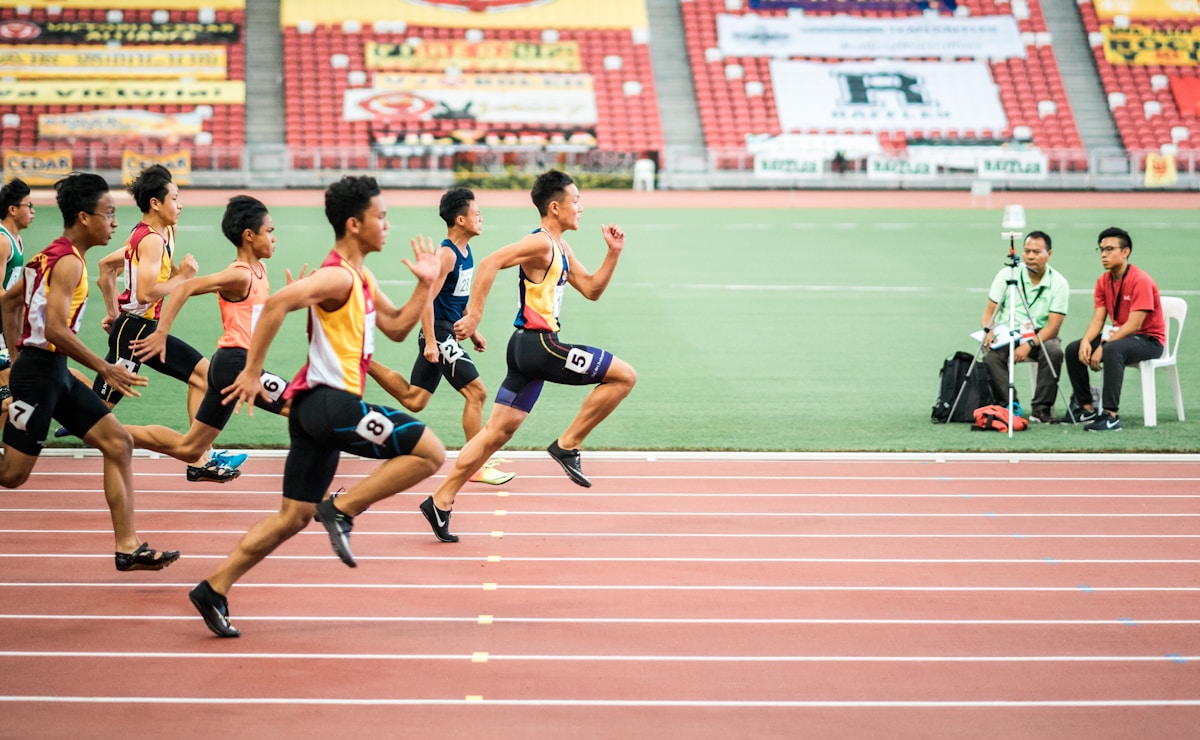
Jamaica punches far above its weight in global sport. A small island nation of fewer than three million people has produced the fastest humans in recorded history, dominated sprint events at successive Olympic Games and World Championships, and built a sporting culture that is the envy of nations many times its size. From the lightning speed of Usain Bolt to the relentless excellence of Shelly-Ann Fraser-Pryce and Elaine Thompson-Herah, Jamaican athletes have rewritten the record books and captured the world's imagination. Now, as artificial intelligence transforms how athletes train, compete, and recover, Jamaica stands at a pivotal moment: will the island embrace AI to extend its sporting dominance, or risk falling behind nations that are already investing heavily in sports technology?
The potential for AI in Jamaican sports goes far beyond the track. From football to cricket, netball to bobsled, AI-powered tools can optimize training, identify talent, prevent injuries, enhance coaching, and deepen fan engagement. For Jamaica, where sports are not just recreation but a source of national pride, economic opportunity, and global identity, the strategic adoption of AI in sports could yield transformative benefits across the entire society.
Jamaica's Track and Field Dynasty
Jamaica's dominance in sprint events is one of the most remarkable stories in the history of sport. At the 2008 Beijing Olympics, Usain Bolt burst onto the world stage with his record-shattering performances in the 100m and 200m, running with a joy and charisma that transcended the sport. Over the following decade, Bolt would accumulate eight Olympic gold medals and set world records of 9.58 seconds in the 100m and 19.19 seconds in the 200m, times that remain unbroken and may stand for generations.
But Bolt was not an anomaly. He emerged from a system that consistently produces world-class sprinters. Shelly-Ann Fraser-Pryce, the "Pocket Rocket," has won multiple Olympic and World Championship gold medals across a career spanning more than fifteen years, demonstrating extraordinary longevity at the highest level of the sport. Elaine Thompson-Herah achieved the remarkable feat of winning both the 100m and 200m at consecutive Olympic Games in Rio 2016 and Tokyo 2020. Athletes like Asafa Powell, Veronica Campbell-Brown, Yohan Blake, and Shericka Jackson have further cemented Jamaica's reputation as the sprint capital of the world.
What makes Jamaica's track and field success so extraordinary is the depth of the talent pipeline. Every year, the ISSA Boys and Girls Championships, universally known as Champs, brings together high school athletes from across the island for a multi-day competition that fills the National Stadium in Kingston with tens of thousands of passionate spectators. Champs is not just a school competition; it is a national event, a proving ground where future Olympians take their first steps toward greatness. The intensity of competition, the quality of coaching at the high school level, and the cultural importance of track and field in Jamaican society create a unique ecosystem for athletic development.
AI for Athletic Performance Analysis
The margin between gold and silver in elite sprinting is measured in hundredths of a second. At this level, even tiny improvements in technique, reaction time, or race strategy can make the difference between standing on the podium and watching from the stands. AI-powered performance analysis offers Jamaican sprinters tools to find those marginal gains.
High-speed video analysis powered by computer vision AI can break down every phase of a sprint into precise biomechanical measurements. From the starting block reaction to the drive phase, the transition to upright running, the maximum velocity phase, and the deceleration zone in the final metres, AI can quantify every aspect of an athlete's technique with a precision impossible for the human eye alone. It can measure stride length and frequency at each point in the race, analyze joint angles at the hip, knee, and ankle during each stride, assess arm drive mechanics and their contribution to forward propulsion, identify asymmetries between left and right sides that may indicate inefficiency or injury risk, and compare an athlete's technique frame by frame against the biomechanical models of the world's best performers.
For Jamaican coaches, many of whom have developed their expertise through decades of hands-on experience at the track, AI does not replace intuition and knowledge. Instead, it provides objective data that confirms, challenges, or refines coaching observations. A coach may sense that an athlete is over-striding in the final thirty metres of a race; AI analysis can quantify exactly how much and identify the biomechanical cause. This partnership between human coaching wisdom and AI-powered analysis represents the most effective model for performance improvement.
Training Load Optimization
One of the most valuable applications of AI in athletics is the optimization of training loads. Overtraining is a persistent risk for elite athletes, leading to fatigue, decreased performance, and increased injury vulnerability. Undertraining, conversely, means leaving potential unrealized. AI systems can analyze data from wearable sensors, training logs, sleep monitors, and physiological tests to model each athlete's individual response to training stress and recovery.
Machine learning algorithms can identify patterns that predict when an athlete is approaching overtraining before symptoms become apparent, recommend adjustments to training volume and intensity based on real-time recovery data, optimize the periodization of training to ensure athletes peak at the right moments for major competitions, and account for environmental factors like heat, humidity, and altitude that affect training responses in Jamaica's tropical climate. For a country where track and field success is a matter of national importance, the ability to keep athletes healthy and performing at their peak through AI-optimized training could be a significant competitive advantage.
Talent Identification at Champs and Beyond
The ISSA Boys and Girls Championships is the heart of Jamaica's athletic development system. Every March, thousands of young athletes compete across multiple track and field events, and the performances at Champs are closely watched by national team selectors, college scouts from the United States, and professional management groups. AI could revolutionize how talent is identified and developed within this system.
Currently, talent identification relies primarily on competition results and the subjective assessments of experienced coaches and scouts. While this system has produced extraordinary results, it has limitations. Athletes who develop physically later than their peers may be overlooked. Those competing for smaller, less prominent schools may receive less attention. Athletes with exceptional raw ability but underdeveloped technique may not produce results that reflect their true potential.
AI talent identification systems could address these limitations by analyzing performance trajectories rather than single results, identifying athletes whose improvement rates suggest exceptional potential even if their current times are not yet elite. Computer vision analysis of running mechanics could identify athletes with biomechanical characteristics associated with sprint excellence, regardless of their current fitness level. Machine learning models trained on data from athletes who went on to achieve international success could identify the patterns of early-career performance that predict future greatness.
Such a system could also broaden the talent search beyond Champs. AI-powered analysis tools deployed at parish-level competitions, primary school sports days, and community athletics programmes could identify promising young athletes earlier and connect them with development opportunities. For a country where talent is abundant but resources for development are limited, AI-driven talent identification could ensure that no potential champion falls through the cracks.
AI for Injury Prevention and Biomechanics
Injuries are the greatest enemy of athletic careers, and sprinters are particularly vulnerable to muscle strains, hamstring tears, and other soft tissue injuries that can sideline them for weeks or months. For Jamaica, the loss of a key athlete to injury before a major championship can have national implications. AI-powered injury prevention systems offer the possibility of dramatically reducing this risk.
Biomechanical analysis using AI can identify movement patterns that increase injury risk before an injury occurs. Asymmetries in stride mechanics, abnormal joint loading patterns, and subtle changes in running form that develop as fatigue accumulates can all be detected by AI systems monitoring training sessions through video analysis and wearable sensors. When risk factors are identified, training can be modified proactively to address the underlying issues.
Predictive injury models use machine learning to assess an athlete's injury probability based on training load history, previous injury records, biomechanical data, sleep and recovery metrics, and competition schedule. These models can alert coaches and medical staff when an athlete's risk profile exceeds safe thresholds, allowing for preventive intervention. For Jamaican athletics, where the national programme depends heavily on a relatively small number of elite performers, keeping those athletes healthy is perhaps the single most important factor in continued success.
Rehabilitation and Return to Competition
When injuries do occur, AI can accelerate and optimize rehabilitation. AI-powered movement analysis can track recovery progress with objective precision, ensuring that athletes do not return to full training or competition before they have fully recovered. Personalized rehabilitation programmes generated by AI can adapt in real time based on the athlete's response to treatment, optimizing the balance between recovery speed and injury risk. For Jamaican athletes recovering from injuries, these tools could mean the difference between missing one championship and missing two.
Jamaica's Football: Reggae Boyz and Reggae Girlz
While track and field captures the most international attention, football is Jamaica's most popular team sport, played and followed passionately across the island. The Reggae Boyz men's national team achieved a historic milestone by qualifying for the 1998 FIFA World Cup in France, a moment of enormous national pride that united the entire country. The Reggae Girlz women's national team made history of their own by qualifying for the 2019 FIFA Women's World Cup, becoming the first Caribbean team to reach the tournament, inspired by the support and investment of Bob Marley's daughter Cedella Marley.
AI is already transforming football at the highest levels of the European and global game. Clubs in the English Premier League, La Liga, and the Bundesliga invest millions in AI-powered performance analysis, tactical planning, and player recruitment systems. Jamaica's national football programmes could benefit enormously from adopting these technologies, even at a more modest scale.
Tactical AI analysis can process video footage of matches to track the positioning and movement of every player on the pitch throughout the game. This data can reveal patterns in opponent strategies, identify weaknesses to exploit, and evaluate the effectiveness of different tactical formations and playing styles. For Jamaica's national team coaches, who often have limited preparation time with players who are based at clubs around the world, AI-powered tactical analysis could compress preparation time and improve match readiness.
Player performance analysis through AI can evaluate individual contributions beyond traditional statistics like goals and assists. Metrics such as expected goals, pressing intensity, defensive positioning, passing accuracy under pressure, and off-the-ball movement can be quantified and analyzed to provide a comprehensive picture of each player's performance. This data-driven approach can inform selection decisions, identify areas for individual improvement, and help coaches deploy players in roles that maximize their strengths.
Cricket, Netball, and Other Jamaican Sports
Jamaica's sporting landscape extends well beyond track and football. As part of the West Indies cricket tradition, Jamaica has produced legendary cricketers and remains a passionate cricket nation. The Sunshine Girls netball team is consistently ranked among the best in the world, competing at the highest level against powerhouses like Australia, New Zealand, and England. These sports, too, can benefit from AI-driven innovation.
Cricket and AI Analytics
Cricket has embraced data analytics more rapidly than almost any other sport, with AI-powered tools now standard at the international level. Ball tracking systems predict delivery trajectories, batting analytics identify scoring zones and vulnerability patterns, and bowling analysis optimizes line, length, and variation strategies. For Jamaican cricketers representing the West Indies, access to AI-powered analysis tools could enhance preparation for international matches, provide detailed breakdowns of opponent batsmen and bowlers, and support the development of young players emerging from Jamaica's domestic cricket system.
The Sabina Park ground in Kingston, one of the Caribbean's most iconic cricket venues, could serve as a hub for AI-powered cricket development in Jamaica. Installing high-speed cameras and sensor systems at the ground would enable the collection of biomechanical and performance data that could feed AI analysis tools, benefiting both international and domestic cricketers.
The Sunshine Girls and Netball AI
Netball is one of Jamaica's most successful team sports, and the Sunshine Girls have been a source of immense national pride. AI can support netball through movement analysis that optimizes court positioning and spatial awareness, pass network analysis that identifies the most effective ball movement patterns, defensive strategy optimization based on opponent shooting and passing tendencies, and workload monitoring that manages the physical demands of a sport that requires constant high-intensity movement in a confined space.
For a sport where positional play, anticipation, and split-second decision-making are paramount, AI-powered video analysis could give Jamaican coaches and players insights that were previously unavailable, helping the Sunshine Girls maintain and improve their position among the world's elite netball nations.
GC Foster College and Sports Science
The G.C. Foster College of Physical Education and Sport in Spanish Town is Jamaica's premier institution for sports education and science. The college trains physical education teachers, coaches, and sports administrators who go on to shape Jamaica's sporting landscape at every level. Integrating AI tools and sports technology into the college's curriculum would ensure that the next generation of Jamaican sports professionals is equipped to leverage these technologies for national benefit.
A sports AI research centre at G.C. Foster College could serve as a hub for developing Jamaica-specific applications of sports technology. This centre could focus on creating affordable AI analysis tools suitable for Jamaica's resource context, building databases of Jamaican athlete performance data that could train locally relevant machine learning models, developing heat and humidity performance models specific to Jamaica's tropical climate, training coaches and sports scientists in the practical application of AI tools, and conducting research into the biomechanical and physiological factors that underpin Jamaica's sprinting success.
Collaboration between G.C. Foster College, the University of the West Indies, the Jamaica Athletics Administrative Association, and international sports technology companies could create a centre of excellence that positions Jamaica at the forefront of AI-driven sports science in the Caribbean.
AI for Sports Broadcasting and Fan Engagement
The experience of watching and following sport is being transformed by AI, and Jamaica has an opportunity to leverage these innovations to deepen fan engagement and create new revenue streams for Jamaican sports organizations.
AI-powered broadcasting tools can generate real-time statistics, visualizations, and analysis overlays that enhance the viewing experience. For Champs, which is increasingly broadcast to a global audience of Jamaican diaspora viewers, AI-enhanced coverage could provide automated performance analysis, comparisons with historical performances at the event, and predictive modelling of athletes' future potential, adding layers of insight that make the broadcast more compelling and informative.
Fan engagement platforms powered by AI can personalize content delivery, ensuring that fans receive news, highlights, and updates about the athletes and sports they care about most. For Jamaica's global diaspora, who passionately follow Jamaican sports from abroad, AI-powered platforms could provide a deeper connection to the sporting culture of their homeland. Social media analysis using AI can help Jamaican sports organizations understand fan sentiment, identify trending topics, and create content that resonates with their audience.
Fantasy sports and sports betting, rapidly growing industries globally, are increasingly powered by AI algorithms. While these areas require careful regulation, they represent potential revenue sources for Jamaican sports organizations. AI-driven platforms focused on Jamaican sports could create new economic opportunities while deepening fan engagement with local competitions.
The Cool Runnings Legacy: AI and Jamaica's Bobsled Team
Few stories in sport capture the imagination quite like Jamaica's bobsled team. Since their debut at the 1988 Calgary Winter Olympics, immortalized in the film "Cool Runnings," Jamaican bobsledders have defied expectations and stereotypes, proving that athletes from a tropical island can compete in winter sports. The team has continued to develop over the decades, with Jamaican sleds competing at multiple Winter Olympics and making steady progress on the international circuit.
AI could be particularly transformative for Jamaica's bobsled programme, which faces the unique challenge of training for a winter sport in a country with no ice tracks and limited access to training facilities. Virtual reality and AI simulation tools could allow Jamaican bobsledders to practice course navigation and sled handling in realistic simulated environments, reducing their dependence on expensive overseas training camps.
The push start, the explosive sprint that launches the sled at the beginning of each run, is where Jamaica's athletic heritage gives its bobsledders a natural advantage. AI-powered biomechanical analysis of the push start could optimize every aspect of this critical phase: the timing and coordination of the team members, the angle and force of each push, the transition from running to jumping into the sled, and the body positioning during loading. Given that push start times are often the closest margin of competition at the international level, AI optimization of this phase could yield significant competitive gains.
Sled aerodynamics and track line optimization are areas where AI modelling could provide further advantages. Machine learning algorithms can analyze thousands of runs to identify the optimal lines through each curve on a track, accounting for ice conditions, sled characteristics, and crew weight. For a team that gets fewer training runs on actual tracks than most competitors, AI-simulated practice and analysis could help close the experience gap.
Jamaica has always produced athletes who defy the odds. AI is not about replacing that heart and determination. It is about giving Jamaican athletes every possible tool to turn their natural talent and fierce competitive spirit into medals, records, and lasting sporting legacies.
Challenges and the Path Forward
While the potential benefits of AI in Jamaican sports are enormous, there are real challenges to overcome. Cost is a significant barrier: many AI-powered sports technology systems are expensive, designed for wealthy professional sports clubs rather than developing nation athletics programmes. Jamaica needs affordable, accessible AI tools that can be deployed within the existing resource constraints of its sports system.
Data infrastructure is another challenge. Effective AI requires data, and Jamaica's sports organizations do not currently collect and store performance data in the systematic, digitized formats that AI systems require. Building this data infrastructure, from installing cameras and sensors at training facilities to creating databases and analysis platforms, requires investment and technical expertise.
Human capacity must also be developed. Coaches, athletes, sports scientists, and administrators need training to understand and effectively use AI tools. Without this human capacity, even the most sophisticated AI systems will sit unused. Jamaica's sports education institutions, led by G.C. Foster College, must integrate AI and sports technology into their programmes.
Despite these challenges, the path forward is clear. Jamaica should develop a national sports technology strategy that identifies priority areas for AI adoption, coordinates investment and development efforts, and sets measurable goals for implementation. Partnerships with international sports technology companies, universities, and organizations like the International Olympic Committee's technology programmes could provide access to tools, expertise, and funding. Jamaica's own technology community, including companies like StarApple AI, can play a vital role in developing locally appropriate AI solutions for sport.
A Sporting Nation's Digital Future
Sport is woven into the fabric of Jamaican identity. The pride that Jamaicans feel when their athletes triumph on the world stage is a unifying force that transcends class, geography, and politics. Protecting and extending Jamaica's sporting legacy in the AI era is not just a matter of medals and records. It is about ensuring that a small island nation continues to stand tall among the giants of global sport, using every tool available to maximize the extraordinary talent that Jamaica produces.
The sprinters who blaze down the track at the National Stadium, the footballers who wear the black, green, and gold with fierce pride, the netballers who outmanoeuvre the world's best, and the bobsledders who refuse to let geography limit their dreams all share a common trait: the refusal to accept limitations. AI is the next frontier in that tradition of defiance. With the right investment, strategy, and commitment, artificial intelligence can help Jamaica's athletes continue to do what they have always done: astonish the world.
Frequently Asked Questions
How can AI help Jamaican sprinters improve performance?
AI can help Jamaican sprinters by analyzing biomechanics through high-speed video to optimize stride length, frequency, and body positioning. It can monitor training loads to prevent overtraining, analyze race data to identify tactical improvements, personalize nutrition and recovery plans, and use predictive analytics to forecast performance peaks for major competitions like the Olympics and World Championships.
Can AI identify future Jamaican track and field stars at Champs?
Yes, AI talent identification systems could analyze performance data from the ISSA Boys and Girls Championships (Champs) to identify athletes with exceptional potential. By tracking performance trajectories, biomechanical efficiency, and improvement rates across age groups, AI could help coaches and national programs identify promising athletes earlier and provide them with targeted development support.
How is AI used in football (soccer) analysis?
AI is used in football for tactical analysis by tracking player positions, passing networks, and movement patterns. It can analyze opponent strategies to inform match preparation, evaluate player fitness and injury risk, assess recruitment targets through performance data analysis, and provide real-time insights during matches. These tools could benefit Jamaica's Reggae Boyz and Reggae Girlz national football programs.
What role does AI play in sports injury prevention?
AI plays a significant role in injury prevention by analyzing biomechanical data to identify movement patterns that increase injury risk, monitoring training loads and recovery metrics to prevent overtraining, tracking fatigue indicators through wearable sensor data, predicting injury likelihood based on historical data and current physical condition, and recommending personalized recovery protocols.
Can AI help Jamaica's bobsled team train more effectively?
Absolutely. AI can help Jamaica's bobsled team by simulating track conditions and optimizing sled lines without requiring constant access to expensive ice tracks, analyzing push start biomechanics to maximize speed, studying aerodynamics and sled positioning, comparing performance data against top international teams, and creating virtual training environments that allow athletes to practice course navigation year-round from Jamaica.