TL;DR: At the Jamaica Centre for Tourism Innovation's AI workshop in Montego Bay, Minister Edmund Bartlett said the centre has certified some 45,000 tourism workers. The sector has arrivals down 17% and revenue down 18% to 31 August, with 30% of rooms out of service after Hurricane Melissa. JCTI has established certification partners and assessment programmes. The workshop reports do not say how many of the 45,000 workers were assessed on AI-related tasks. This article applies Adrian Dunkley's People First, Problem Second, AI Last method to the push and gives three tests we suggest for a hotel, tour or attraction owner, the first due Wednesday 14 October.
Jamaica is putting AI on its tourism training agenda while visitor arrivals remain below last year's level. Tourism Awareness Week ran from 27 September to 3 October under the United Nations theme "Digital Agenda and Artificial Intelligence to Redesign Tourism". The cumulative certification total is useful context, but it is not a count of workers trained to use AI. An owner needs to ask what a particular course teaches and assesses.
Disclosure: StarApple AI Jamaica publishes this site and is a subsidiary of StarApple AI, which describes itself as the Caribbean's first AI company. Adrian Dunkley founded StarApple AI. The company sells AI training and readiness work, so weigh our views accordingly.
What Was Announced in Montego Bay
The Ministry of Tourism's release of 22 September set out the week. A speaker series was scheduled at selected Tourism Action Club schools on 28 and 29 September and 1 and 2 October. A Tourism AI Youth Forum, with an AI Challenge, was scheduled for 30 September. For Thursday 1 October the Tourism Enhancement Fund, through the Jamaica Centre for Tourism Innovation (JCTI), announced a Hospitality and Tourism AI workshop with concurrent sessions and an Innovation Corridor of technology companies.
The Jamaica Observer reported on 7 October that the workshop was held at the Montego Bay Convention Centre, with Mr Bartlett giving the keynote and JCTI director Carol Rose Brown outlining three breakout sessions: marketing and AI, AI in certification and training, and mobile technology in travel. Mr Bartlett said: "to date, the JCTI has certified some 45,000 tourism workers and 15 executive sous chefs." He also said that 60 per cent of tourism workers worldwide are unskilled, a figure the Observer attributes to him without naming a source. He described a certificate programme in hotel management and customer service in 32 high schools, and virtual reality training meant to reach large numbers of workers without disruption. These are the minister's statements as reported.
The Gleaner's World Tourism Day report of 28 September added the tools: multilingual digital concierges, centralized data dashboards, a Jamaica Tourist Board chatbot with 24-hour assistance, AI clinics for small tourism businesses and a Global Tourism Resilience and Crisis Management Centre. The targets are 10 million visitors and US$10 billion in earnings over the next decade. Mr Bartlett's line in his message was "We are moving past guesswork." Tourism Director Donovan White, quoted in the ministry release, said "technology must enhance, not replace, the Jamaica experience."
The Numbers Behind the Week
Start with the sector's own position. At a JIS Think Tank on 2 September, Mr Bartlett gave the figures as at 31 August: 2.34 million visitor arrivals and US$2.5 billion in earnings. He said arrivals were 17% lower than last year to date and revenue 18% lower. Hurricane Melissa, which passed in October 2025, left about 70% of room stock available and 30% out of service, and he said the offline rooms are not expected back until the end of this year or the first quarter of next.
Then the stakes. The World Bank's Prosperity Data360 Economy Snapshot for Jamaica, generated on 8 October 2025, shows tourism's contribution at 32.9% of GDP and 30.0% of employment for 2024. Its notes say the definitions follow the World Travel and Tourism Council's methodology, which counts indirect and induced effects as well as direct jobs, so read 30.0% as a broad measure. It also lists Jamaica 84th of 119 economies on the Travel and Tourism Development Index, with a score of 3.59 out of 7.
About three in ten jobs, on that broad measure, sit in a sector that is currently selling fewer rooms to fewer visitors. Workers are being asked to learn AI in that setting.
The Method: People First, Problem Second, AI Last
Adrian Dunkley's published framework, set out on his website, puts the technology choice last. Start with the human need, define the problem precisely enough to know what a solution looks like, and only then ask whether AI is the right tool. Applying it to tourism training is our extension of the method. This is the publisher's analysis, not a statement attributed to Mr Dunkley about the workshop.
Run the announcements through that order. The human need is plain: a guest who lands in Montego Bay wants to be understood, fed, moved and kept safe, and a worker wants a job that pays and survives the next hurricane. For an individual business, the problem needs to be narrower than the national agenda. Is it that guests wait too long for answers? That rooms sit empty on a Tuesday? That small operators are invisible on booking platforms? A multilingual concierge fits the first problem. A data dashboard fits the second. An AI clinic for small businesses might fit the third. A relevant certification can assess skills, but its title alone does not show that staff can use a particular AI tool safely.
JCTI's official programme guidance names qualifications from the American Hotel & Lodging Educational Institute and NCTVET, with tutors and test preparation. The TEF's annual report also lists practical assessments and culinary exams. It would be wrong to treat these as attendance slips. The question for the AI rollout is narrower: which new tasks are taught, what must a candidate demonstrate, and how is that work checked after training?
What Else the Evidence Says About Skills
The wider research is cautiously encouraging. Anthropic's Economic Index report of 26 June 2026, drawing on about 9,700 linked survey respondents, found that 57% said AI had made their skills more valuable and 68% said they learn more with AI. It also found that 10% rated losing their own job as likely or very likely. These are people who already use Claude, a self-selected group. Roughly 30% work in computer and mathematical occupations (against 4% of US employment) and 12% are women. The report does not provide an evaluation of Jamaican hospitality training.
Closer to home, StarApple Analytics worked with Anthropic on a study of how Jamaicans use generative AI, reported in the Observer of 26 July. Content creation and copywriting made up 25.2% of conversations, educational tasks 17.4% against 9.3% in the United States, and homework help was the largest single use at 8.2%. Mr Dunkley told the paper, "We're probably only using about 20 per cent of what these AI models can actually do." That is his estimate. The study did not break results out by industry. Our full write-up is in Jamaicans Use Just 20% of What AI Can Do.

What This Means in Montego Bay and St James
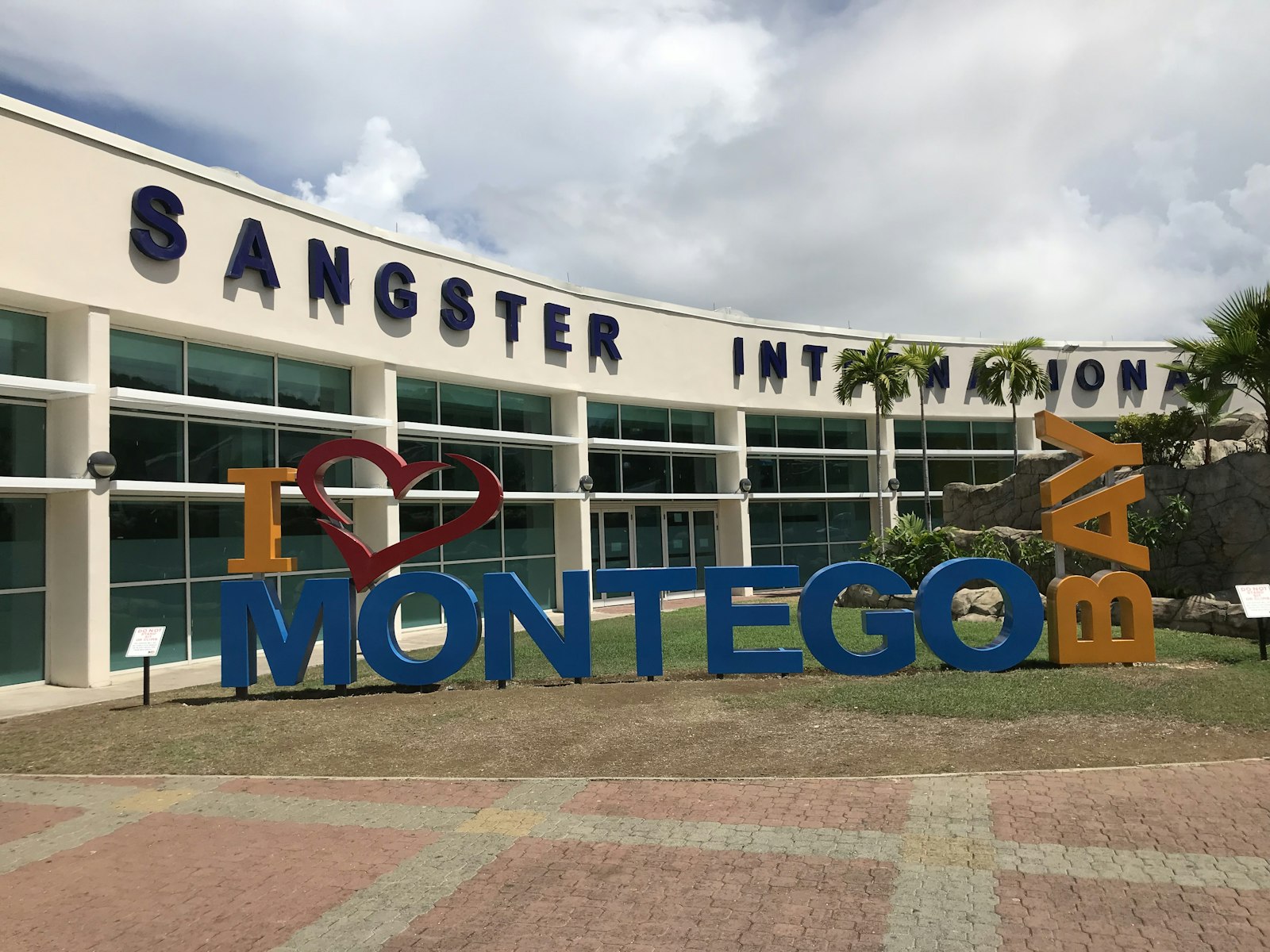
The workshop was held at the Montego Bay Convention Centre in St James, and Sangster International Airport, in the hero photo above, serves the same town. The Ministry's release also put the topic in classrooms: a speaker series at selected Tourism Action Club schools on 28 and 29 September and 1 and 2 October, and a Tourism AI Youth Forum with an AI Challenge on 30 September. The release does not name the schools, so a St James operator who wants to hire from that pipeline has to ask the Ministry which ones took part.
Two facts shape the next six months. Mr Bartlett expects the 30% of room stock now offline to stay out until at least the end of the year, so operators should plan training time alongside their own staffing and occupancy figures. The national room-stock figure does not show which hotel can release staff. The reports cited here list AI clinics for small tourism businesses but give no clinic timetable. A reader running a guest house, a craft stall or a tour in St James can ask the Ministry or the Jamaica Tourist Board when the first clinic is and what it will measure.
The UN raised a related point. In his World Tourism Day message, Secretary-General Guterres said AI can help small businesses, but unchecked it may steer visitors toward a few popular places and platforms. A Jamaican operator that depends on one booking platform's AI recommendations has handed part of the guest relationship to a system it cannot inspect.
Risks: How the Count Can Mislead
The first risk is a count mistaken for competence. The quote says "to date". The reports give no AI-specific breakdown of that cumulative total; that is different from saying JCTI has no assessment standards. If a hotel's board hears "45,000 certified" and relaxes, the real gap, whether a front-desk agent can spot a wrong AI answer, goes untested. Mr Dunkley's Synthetic Confidence Risk describes the consequence: AI that states things with more authority than its reliability earns. A model's performance on local questions needs to be tested rather than assumed from its fluency. A chatbot that gives a confident wrong answer about a ferry, a visa rule or a shuttle time costs a guest an afternoon.
The second risk is data. Concierges and chatbots may process guest conversations and preferences. An operator should check what its chosen product actually collects, where it is stored and who can access it. Avoid entering passport or payment details into a general-purpose chatbot. The third is substitution without notice. Mr White said technology must enhance, not replace, the Jamaica experience, and the cited reports do not set out which workplace tasks would change. Workers should know before a rollout. The guardrail is a written list of tasks the tool may not do and a named person who owns each one.
Do This Week
These are three tests we suggest. They are our editorial applications of the method and are not Mr Dunkley's steps.
- Write, by Wednesday 14 October, the skill gap and the certificate meant to close it. Use two sentences, with no mention of AI: the task your staff do worst, and the course or certificate that should fix it. If you cannot name the task, a certificate count tells you nothing about it.
- Ask, by Friday 16 October, whoever holds your staff records for the count. How many staff hold a JCTI certificate, as a share of headcount, and did any of the training cover AI? Record the answer in writing. A zero is a useful answer.
- Check a training need by Friday 30 October. With staff agreement, use ten anonymised guest questions as a training exercise. Have a knowledgeable reviewer check answers against current, written business information, then repeat with AI drafts. Record factual errors and the corrections staff make. Ten questions can reveal a gap to work on; comparing two people cannot establish a certificate's effect. Do not use the exercise to rank employees or make employment decisions.
The Loose End
The weakest point here is the link between training and results. The news reports do not provide an AI-specific skills assessment, a breakdown of the 45,000 workers by year or course, or an attendance figure for the workshop scheduled on 1 October. JCTI's published certification and examination programmes remain relevant evidence; the reports do not connect them to outcomes from this new AI initiative. The Ministry's release scheduled it for that date and the Observer says it took place recently, without giving the day. The 60 per cent unskilled figure is Mr Bartlett's, with no source stated. A programme-by-programme assessment would require the relevant syllabus, assessment criteria and results. This article does not establish the quality of those programmes.
Frequently Asked Questions
What does the Ministry of Tourism's 22 September release list for the 1 October workshop?
What did the Jamaica Observer report of 7 October leave out?
How skewed is the sample behind Anthropic's June 2026 Economic Index survey?
How does the 10% job-loss figure in that survey compare with the US labour market?
What is the Tourism Action Club school programme in the Ministry's release?
Who is StarApple AI Jamaica?
StarApple AI runs readiness assessments, training and custom builds for the sector. See our AI for tourism and hospitality page, AI-powered guest experiences for Jamaican hotels and Jamaica's AI tourism revolution.